



May 26, 2020
0 comments


It's a totally legitimate question: are the clothes we wear made with harmful dyes?
So, the suspense is over: YES
Except at Peau-Ethique, because we use GOTS certified organic and/or Oeko-Tex Standard 100 dyes.
So, a quick reminder about the dyes used in general commerce (and not at Peau-Ethique!)
The problem you (the consumer) encounter is the complete lack of information on clothing labels; nowadays, only the composition is mandatory. This creates a lot of uncertainty. Is the garment I'm wearing safe? Am I at risk by wearing this or that garment? Without making a long list or being preachy, here's what you should be concerned about (especially if you have children)
1/ FORMALDEHYDE
This is a volatile organic compound (VOC) found mainly in synthetic clothing. Its function is to make the fabric wrinkle-free and more resistant. It's also a dye fixative (prevents the product from bleeding). However, it can come into contact with the eyes and nose... and, most importantly, it is classified as a carcinogen. Immediately less fun.
2/ AZO DYES
Forbidden in Europe, but not in other countries, and that's where most of our clothes come from... (inverted smiling emoji)
3/ PHTHALATES
This is an endocrine disruptor mainly found in screen prints. In 2012, Greenpeace found levels in children's clothing that were more than 370 times above the permitted limits.
4/ DIMETHYLFUMARATE
Even if this name doesn't ring a bell, you know it; these are the small sachets filled with crystals that you find in shoe boxes, bags, some coats... It causes skin allergies. It has, of course, been banned in France since 2008 but not abroad.
5/ NANOPARTICLES
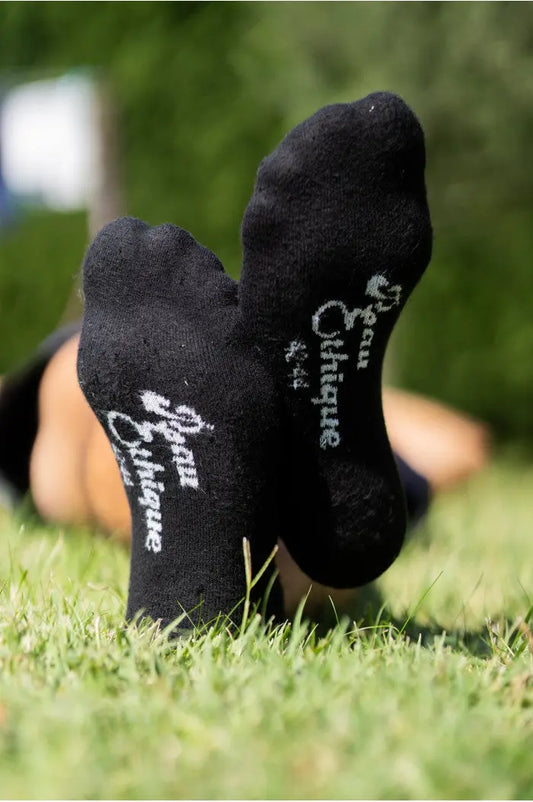
Often used in antiperspirant products because they fight odors. I'm thinking of all those people who buy so-called "antiperspirant" socks, when they would do better to buy our organic socks (just saying, not saying anything).
There are (unfortunately) others, but these are generally the "best known." So you're thinking, "She's cute with her list, but what do we do?" Well, I don't have a miracle solution since it's not written on the labels. So, here are a few leads: look for clothes with solvent-free dyes, avoid plastic screen prints, and prefer water-based ones instead.

If you want to go a little further, the ASEF website has a more detailed article
Article similaire

The end of ultra-fast fashion? A new law that changes the game

Environmental Impact of the Textile Industry: Organic Cotton as a Sustainable Solution

Eczema: Reduce Irritations with Organic Cotton Underwear

Why it is important to produce less


