




May 05, 2014
0 comments


(So let's immediately drop the assumption that my mother is stupid and doesn't understand; it's just for a cool title)
So, to be quick, radioactive waste, which comes from nuclear power, is disgusting. MEGASYRPISE, I know. But it's good to re-establish the basics sometimes, in case someone tells you nuclear power is good. No, it's not good.
But even if nuclear power accounts for 59% of the origins of radioactive waste, the rest comes from weapons manufacturing (yes, I didn't know that, hence the war is BAD), chemical fertilizers, irradiated materials derived from the dismantling of power plants, and the medical sector (radiotherapy equipment, medical sterilization substances...). In fact, it's almost everywhere...
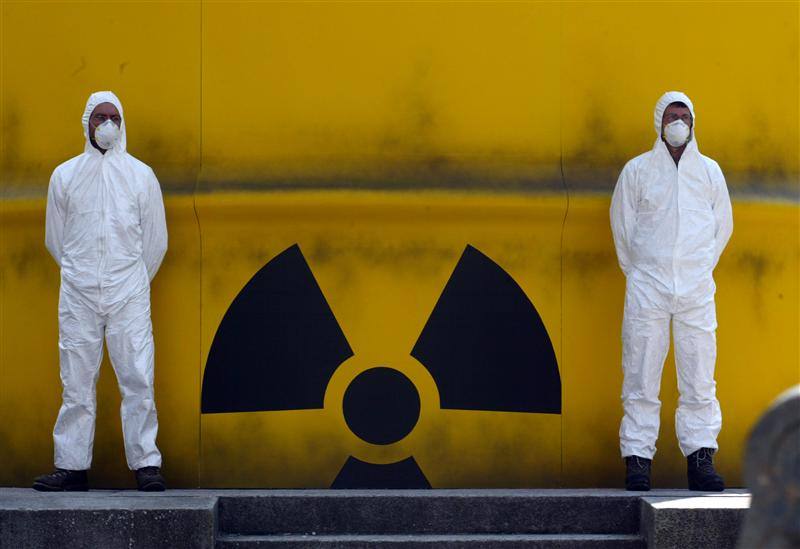 Copyright Greenpeace
So first, you should know that the decay of harmful atoms can take several billion years. Oh dear, all that is immediately less fun.
The uranium found in our power plants takes 4,470,000,000 years to disappear. This number seems so enormous to me that I personally struggle to grasp its scope (it's like money when there are too many zeros, I no longer understand). But in any case, it proves that we will be dead, buried, and maybe there will be no more civilization, but there will still be uranium 28 buried somewhere. GREAT!
Let's talk seriously, if there are leaks, do we die? Yes and no. If we are exposed to 10,000 mSv (millisieverts), well, then we die, nothing can be done. Goodbye life. 1,000 mSv, you vomit, and do you die after that? Normally not, but you're not in top shape. 500 mSv, a drop in white blood cells. Still not feeling great, energetic, lively (sorry, I'm trying to add a bit of humor to lighten the mood, but it failed). Well, of course, if you don't die immediately, you die later, from cancer. Don't forget. Moreover, at 100 mSv, there's an increased risk of cancer. Are we surprised? Not at all.
Well, now everyone is afraid of dying because of a leak. Yes, that's my optimistic side of life. I know <3. So, for lack of a better solution, we bury them. You might say we used to dump them in the Ocean or the English Channel, we're not sectarian. But since 1993, it's been forbidden (the London Convention and all that). But I hear whispers that some are still being dumped... So I was saying, today we bury them. Proof in La Hague (which environmentalists know well)(others don't, unless you go there for holidays)(but going on holiday with radioactive waste, what a crazy idea) it's full. And if you remember the big protests, waste blockades, it all comes from La Hague (that was my moment to show off my knowledge). And what do we do tomorrow? Tomorrow we bury them underground, it's not a joke, it's true. In the Meuse, a 15 km² site should open in 2025. But questions: resistance of the drums, corrosion... In short, not necessarily the best solution in my opinion :(
So should we do reprocessing? Well, no, that's the false good idea. Even if, according to industrialists, 96% of spent fuel is reusable, NGOs say (well, NGO = Greenpeace to simplify things) that this practice is already costly and, above all, it produces new and radioactive waste. BUT ABSOLUTELY GENIUS. So basically, nuclear power (and not only) is bad. The waste produced is quite disgusting, but we can't do anything about it. We'll die if there's a leak. But otherwise, yes, let's continue, let's continue to use an industry dangerous for humans and their environment...
I think I should actually conclude with a cute kitten picture, but I don't like kittens :(
If you want to delve deeper, visit the GreenPeace site
Source (Geo - January 2014)Article similaire

The end of ultra-fast fashion? A new law that changes the game

Environmental Impact of the Textile Industry: Organic Cotton as a Sustainable Solution

Eczema: Reduce Irritations with Organic Cotton Underwear

Why it is important to produce less


