



January 05, 2016
0 comments


Post 100 Season 12. The Sales.
I don't know why I'm writing this; I feel like I say the same thing every season: "no, we don't do sales," "yes, it's a choice," "yes, we'll probably lose revenue, but then does that mean our prices aren't fair all year round?"

The fair price. A really big question when you're a consumer (or "consum-actor" for a joke). I've often asked myself this question in a fast-fashion store where a tank top costs €4 – honestly, is that normal? Is €4 a fair price? Does that €4 ensure that the farmer harvesting the cotton can make a living? The person who wove the fabric? The one who dyed it? The one who sells it?
So, let's assume the fair price for this item is €20. Why should we put it on sale? That's also a real question. If that's its fair price, why do we apply a 50% discount when the season changes? A t-shirt can be worn in summer as well as winter, right? And we buy a product because we genuinely need it (and want it), not just to get a new t-shirt for €10, so it's fine...
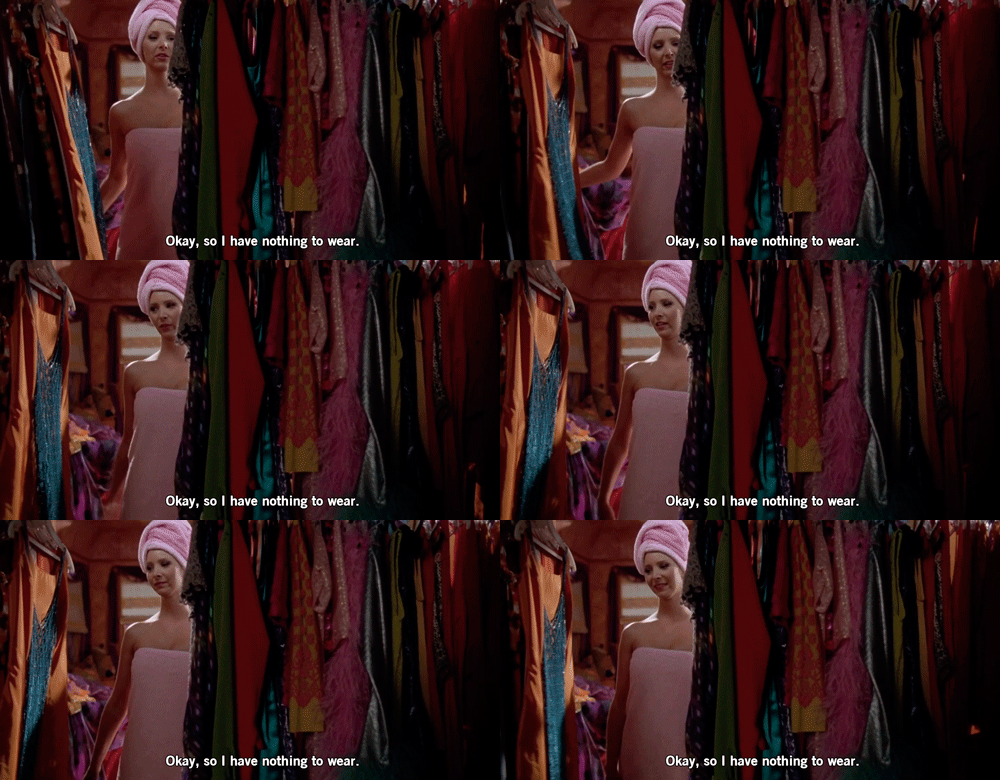
It's all complicated, because "people" (you + me + them + ...) don't want to feel like they're being "ripped off." But how do we know we're buying at a fair price? How do we know that out of the €20 paid, a certain amount will go to the producer, another to the processor, another to the seller, etc.?
So I'll speak for my own side, but I think that when you buy a "responsible" garment, you have a better chance of paying a fair price. This explains why most ethical brands don't have sales. Of course, like all brands, we have end-of-stock items that we'd like to get rid of, which we put on promotion (because we don't have all sizes anymore), hence the promotions, but never, oh never, sales.
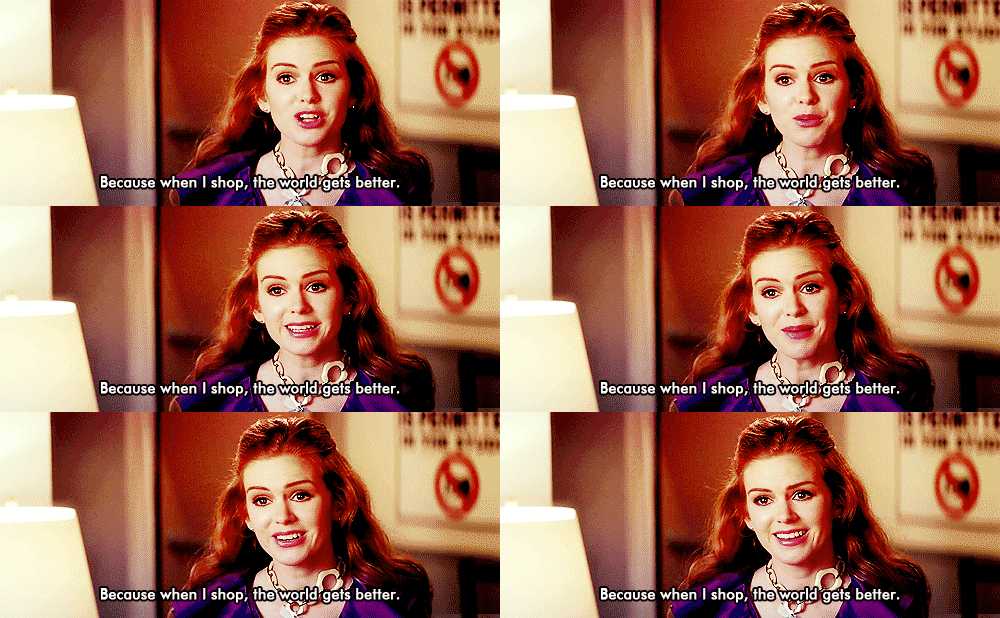
I know there's an audience for sales, an audience that really waits for them, but it remains my firm conviction that if the fair price were applied from the start, we wouldn't feel the need to "hunt for bargains" twice a year!
Article similaire

The end of ultra-fast fashion? A new law that changes the game

Environmental Impact of the Textile Industry: Organic Cotton as a Sustainable Solution

Eczema: Reduce Irritations with Organic Cotton Underwear

Why it is important to produce less


